
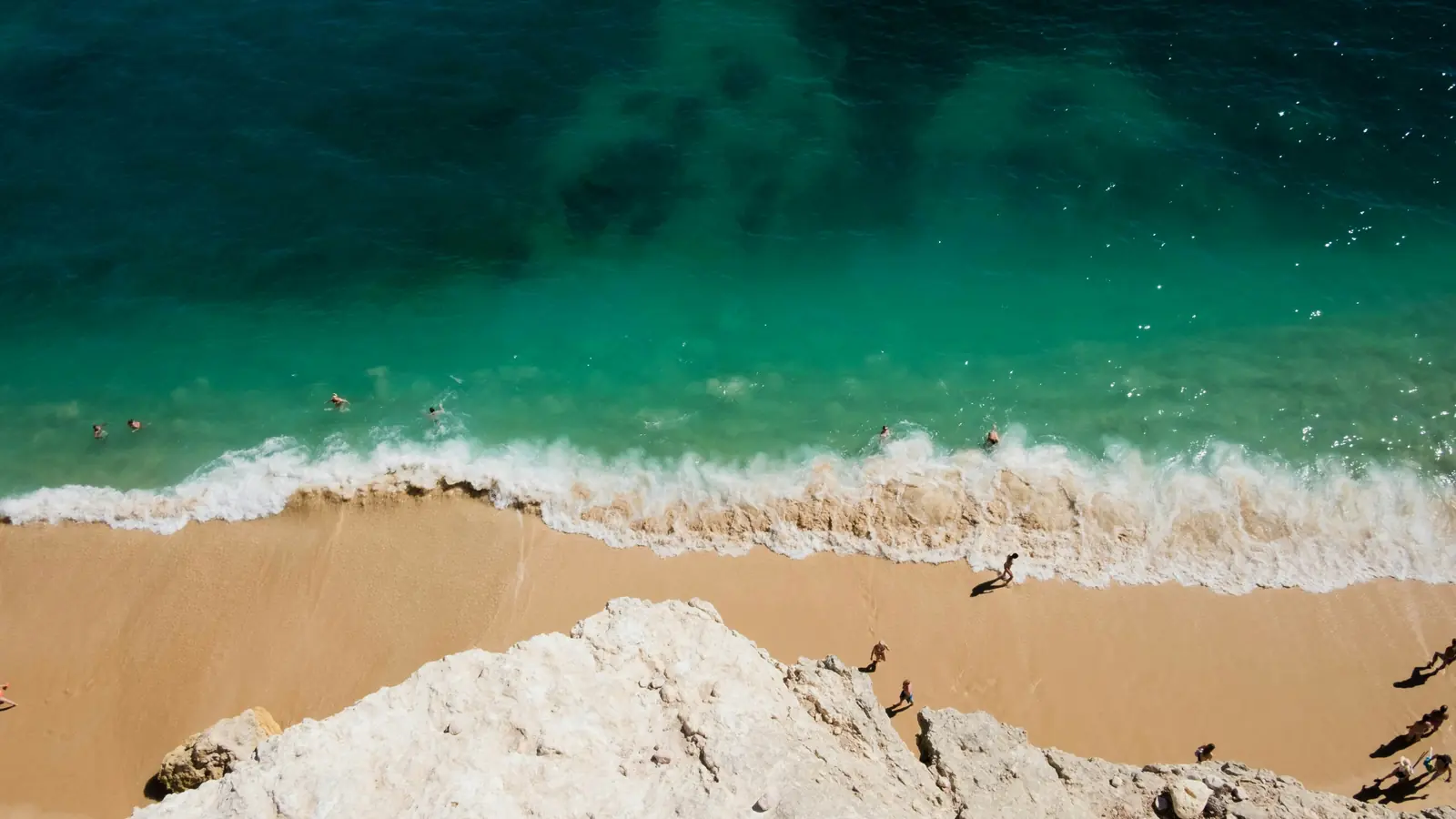
The Algarve’s appeal to American retirees rests on three practical foundations: consistently excellent weather, genuine accessibility from North America, and a social infrastructure built by decades of English-speaking expatriates. Understanding what each of these actually means helps explain why retiring to the Algarve has become a standard choice for Americans seeking a European base without the complications that come with less-established expat communities.
Climate Without the Trade-offs
The Algarve sits at roughly the same latitude as Delaware, protected by the Gulf Stream, which carries warm Atlantic water to the southern Portuguese coast. The result is the sunniest region in continental Europe, with prevailing ocean winds that prevent the heat from becoming oppressive or humid. Summer temperatures stay manageable. Winter rarely dips below freezing. The Algarve avoids the seasonal extremes that make other sunny retirement destinations—parts of Spain, Greece, or southern France—impractical for half the year.
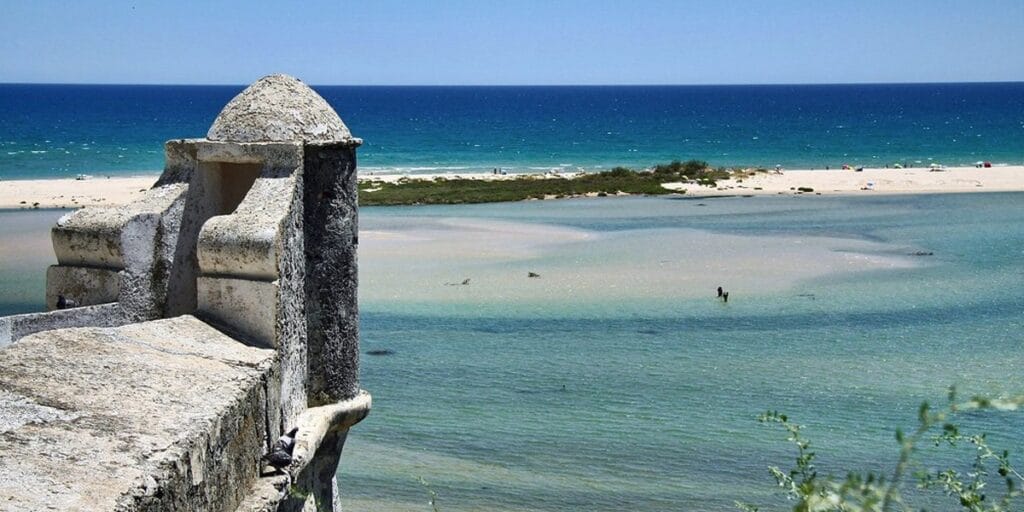
The terrain itself matters. The Algarve’s hills and valleys limited overdevelopment, unlike the Spanish Costa Brava, where flat coastal land made mass construction inevitable. The landscape remains genuinely pleasant rather than wall-to-wall apartment blocks. A retiree here can access both coastal villages and quieter inland towns without driving far.
Getting There From America
Direct flights from the U.S. East Coast to Lisbon take as few as six hours from Boston. A distance made practical by the Portuguese diaspora, which keeps transatlantic flight frequency high. From Lisbon, the drive south to the Algarve takes three hours. A retiree can visit family in the Northeast regularly without the expense or physical toll of long-haul connections. European health tourism and family visits become logistically sensible.
The British Legacy and English Fluency
When American retirees arrive in the Algarve expecting to navigate daily life in Portuguese, they discover that English functions as the operational language. Starting in the 1950s, British families colonized the south coast and brought their institutions with them—golf clubs, private schools, cultural expectations. Portuguese children grew up learning English as a standard skill. By now, English fluency is nearly universal among anyone in the service economy, hospitality, or professional services.
For Americans, this changes the early retirement transition substantially. A retiree can establish routines, handle banking and healthcare consultations, and build friendships without mastering Portuguese in the first year. Learning Portuguese later is easier and more enjoyable when survival does not depend on it. German, Scandinavian, and Eastern European expat communities also live throughout the region, creating a genuinely international social environment.
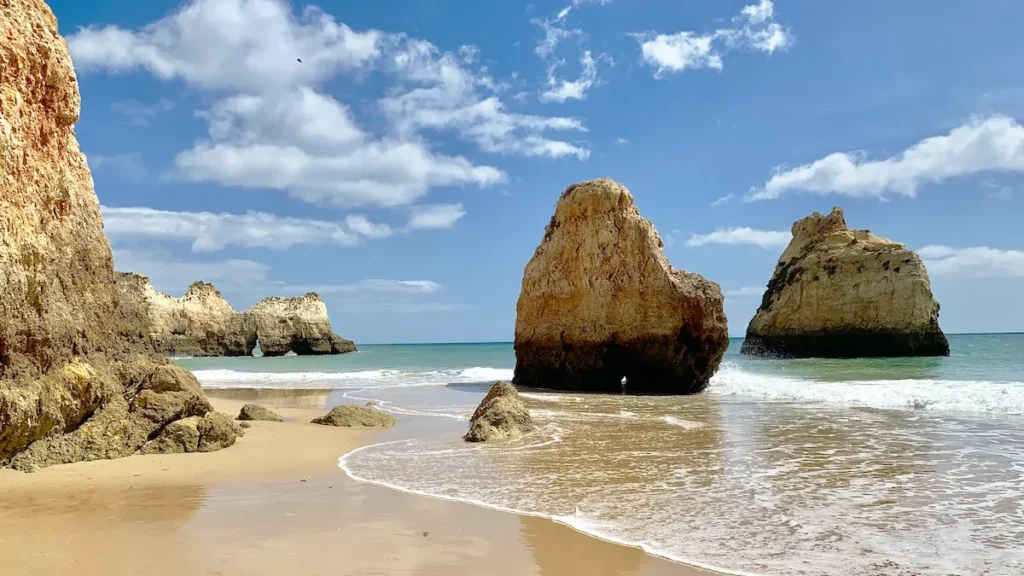
Retiring to the Algarve works well for people who value stability over novelty, community infrastructure over isolation, and accessible healthcare over romantic remoteness. Healthcare quality is high, with modern facilities and English-speaking doctors standard. Residency pathways for American retirees are straightforward. Cost of living is moderate. A comfortable retirement here costs roughly what it would in a modest American college town.
The region’s main limitation is that it functions as a foreign enclave. Those seeking deep cultural integration or linguistic challenge may find the English-language ease counterproductive. For Americans in their 60s and 70s seeking a predictable climate, reasonable proximity to home, and a functioning expatriate infrastructure, the Algarve delivers without surprises.