
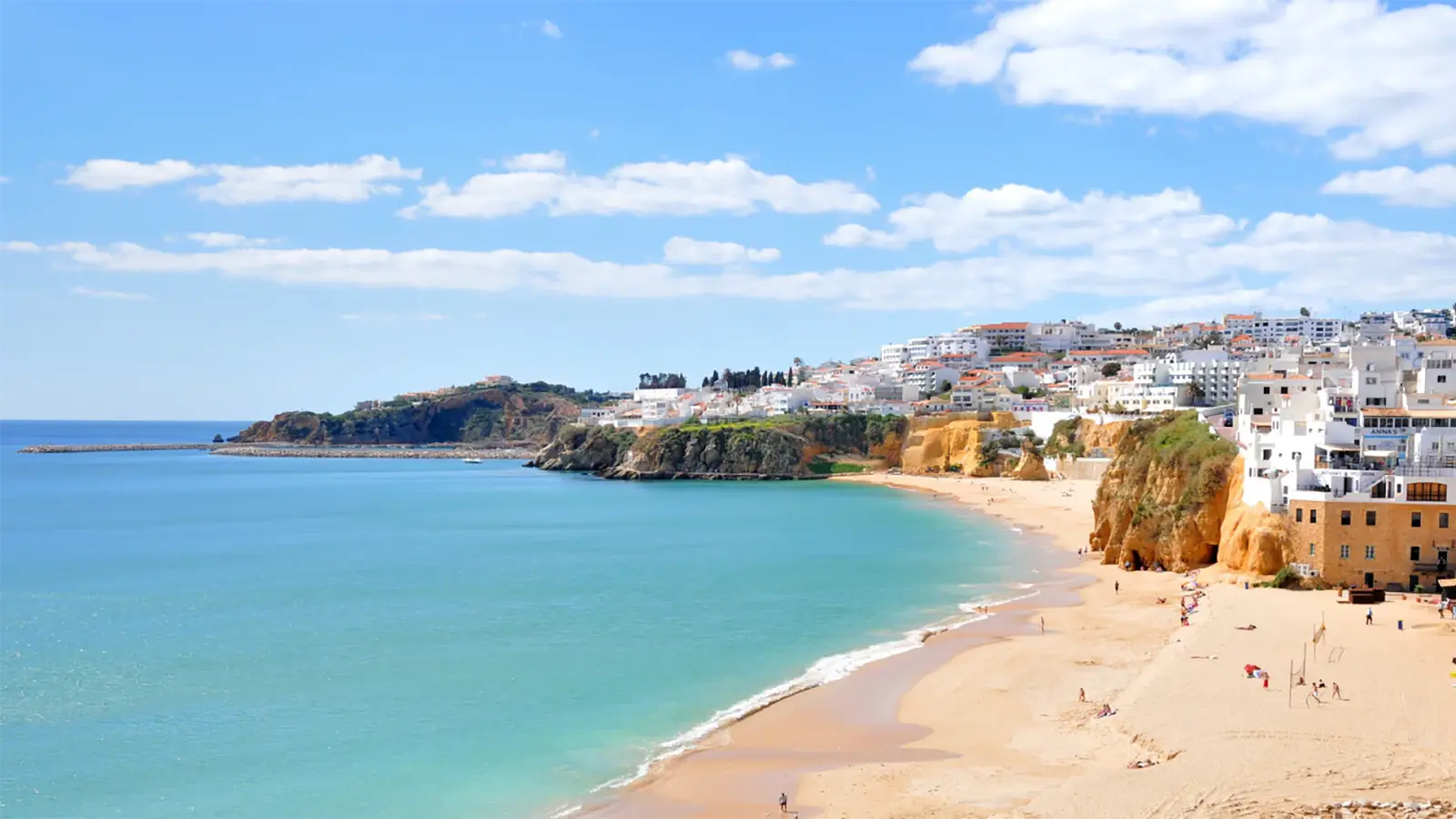
Portugal has become one of Europe’s most popular retirement destinations, combining a mild climate, lower cost of living than much of Western Europe, and established infrastructure for international residents.
For those considering best places to retire in Portugal, the choice depends on what daily life actually looks like, which varies significantly by region.
The Algarve
The Algarve draws more British, Irish, Dutch, and German retirees than anywhere else in Portugal. Long sandy beaches, rugged cliffs, fishing villages that quiet down after summer, and English spoken widely enough that a newcomer can function without Portuguese create straightforward appeal. International supermarkets, private clinics, and golf courses serve the established expat communities.
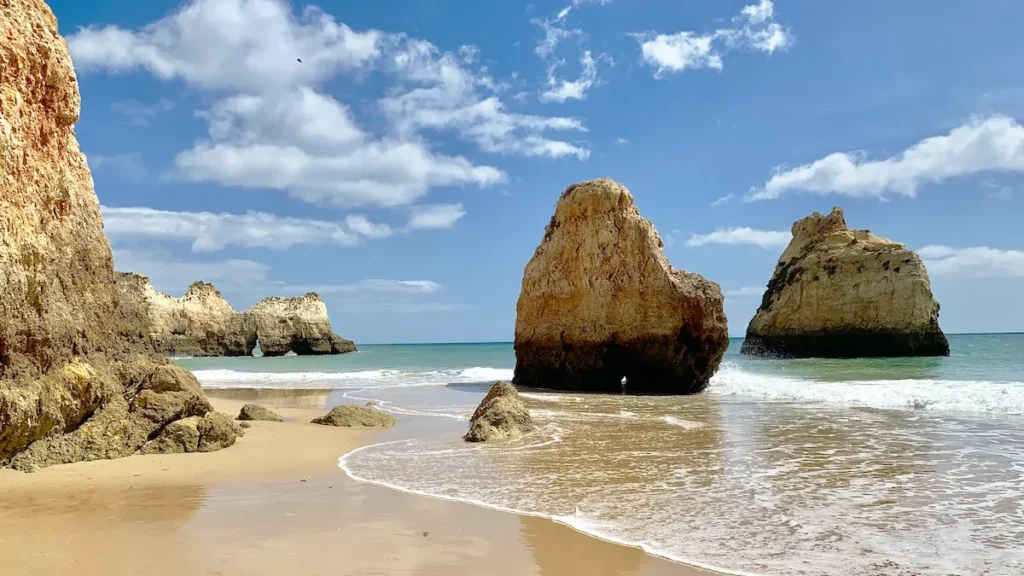
Daily life tends to revolve around morning market runs, café terraces, and evening walks by the ocean. Winter brings relief from summer crowds and more temperate weather. A genuine advantage often overshadowed by promotional imagery of endless sun.
Property costs here are higher than in the north, but lower than Cascais or central Lisbon. For retirees prioritizing a relaxed pace with ready-made social infrastructure, the Algarve remains the default choice.

Madeira
Madeira suits those seeking an island lifestyle with year-round mild weather and direct access to nature. Most retirees base themselves in or around Funchal, where markets, cafés, and the seafront are walkable. Countryside, levada walks, and coastal villages are a short excursion away.
The slower pace appeals to those who want less tourist overlay than the Algarve.
Imported goods cost slightly more than on the mainland, and the island’s isolation means fewer large hospitals, though Funchal has adequate private care. For retirees with a taste for isolation balanced by modern convenience, Madeira delivers on that promise.

Lisbon and Cascais
Lisbon attracts retirees who prioritize culture, healthcare, and public transport over seaside living. The city is consistently ranked among the safest in Europe, and retirees typically settle in quieter neighbourhoods or just outside the centre.
Areas like Príncipe Real, Campo de Ourique, or suburbs like Oeiras keep theatres, museums, hospitals, and shops accessible. Property is significantly more expensive than elsewhere, but the urban infrastructure and medical services justify it for those who value them.
Cascais, west of Lisbon, offers a polished seaside environment with the marina, small coves, and coastal promenades, yet close enough to Lisbon for hospitals and the airport.
Golf courses, cycle paths, and the Sintra-Cascais Natural Park just inland appeal to active retirees. It is one of Portugal’s pricier regions. The combination of safety, English-language services, and compressed lifestyle appeals to those willing to pay for convenience.

Porto and the North
The north stands apart. Porto offers lively riverside living and urban amenities, while nearby towns like Braga or Guimarães, and villages in the Douro Valley, provide quieter, more traditionally Portuguese rhythms.
Winters are cooler and wetter than the south, summers gentler. Property prices here are substantially lower. Often half what you would pay in the Algarve or Cascais, making the north attractive for retirees on tighter budgets.
The north also feels less filtered through tourism. Markets, neighbourhood cafés, and local life operate independently of visitor seasons. For those seeking immersion in actual Portuguese life rather than expat infrastructure, this region rewards curiosity.
Visa and Residency
Most retirees use the D7 visa, which requires proof of monthly income (approximately €1,020 minimum, though amounts vary) and covers dependent family members. The process takes several months and requires a NIF (Portuguese tax number), a Portuguese bank account, and fiscal representation.
US citizens follow the same D7 path. British citizens have the same access as other non-EU nationals since Brexit. The application itself is straightforward. Delays typically occur in the initial paperwork phase or at municipal registration.
Cost and Reality
Portugal is economical compared with other Western European destinations. A modest retired couple can live on €1,500-2,000 monthly outside the main cities, including rent, utilities, food, and occasional dining out. In Cascais or central Lisbon, the same lifestyle costs substantially more.
Healthcare, both public and private, is reliable, though those over 65 or with pre-existing conditions should verify insurance coverage carefully.
A retiree in the Douro Valley lives differently than one in Cascais. Both are choosing Portugal, but for different versions of it. The strongest approach is to rent for several months in your target region first, experience the actual rhythm of daily life, and only then commit to purchase.
Unlock the door to exclusive property opportunities in Portugal with our bespoke advisory services. We pride ourselves on providing objective, client-focused advice that empowers you to make informed decisions.
From market analysis to legal support, we cover every detail. Don’t miss out on your perfect Portuguese property, contact us to begin your journey.
