
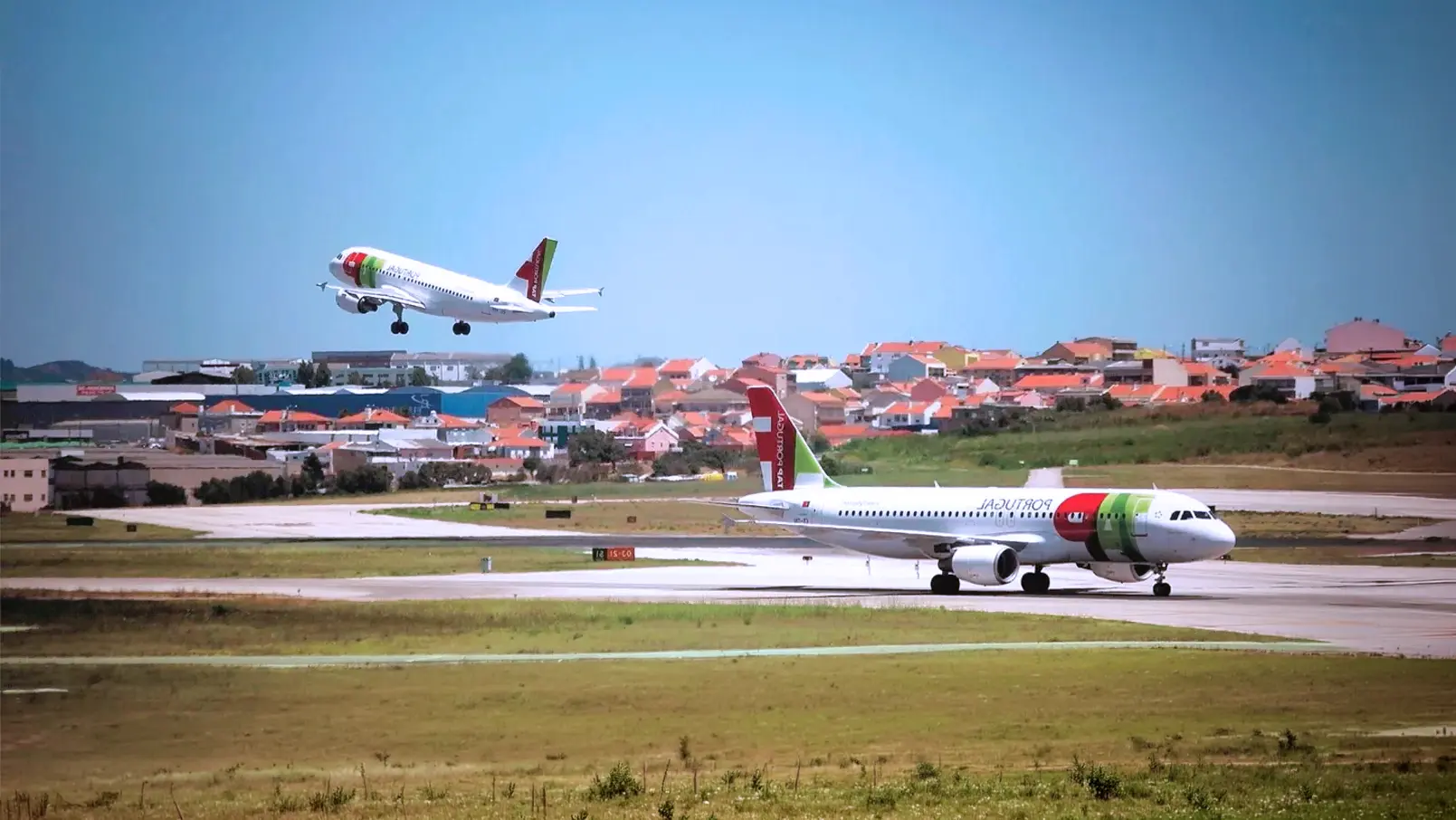
For decades, Lisbon’s residential geography has been shaped by a simple assumption: the centre of economic life sits north of the Tagus, while the southern bank remains more peripheral. The decision to build the new Luís de Camões Airport in Alcochete may gradually challenge that relationship.
Construction is expected to begin in 2029, with the airport planned to open from 2035, eventually replacing Humberto Delgado as the region’s main airport.
More important than the airport itself, however, is the wider network of infrastructure being planned around it, including new rail connections and a third Tagus crossing.
Accessibility Changes Geography
Large infrastructure projects rarely affect property markets simply because they attract passengers. Their influence comes from changing how people move, where businesses establish themselves and which areas become practical places to live.
Alcochete and Montijo already sit within the Lisbon metropolitan area, but their relationship with the capital has always been constrained by the river. Better rail and road connections could reduce that separation considerably.
If commuting becomes easier while the country’s main international airport moves east of Lisbon, areas that currently feel secondary may become more relevant to people whose lives depend on frequent travel or access to the capital.
There are already signs of increased attention. Asking prices in Alcochete were around €2,700 per square metre in June 2026, 6% higher than a year earlier, while Montijo recorded annual growth of almost 14%.
These figures cannot be attributed to the airport alone, but they show that the residential market south and east of Lisbon is not waiting until 2035 to evolve.
Proximity Is Not The Same As Value
It would nevertheless be simplistic to assume that every property close to the new airport will benefit equally. Airports also bring aircraft noise, traffic, development pressure and changes in land use.
The most attractive residential areas may therefore not be those closest to the terminals, but those that combine improved accessibility with distance from the disadvantages that major infrastructure inevitably creates.
This is where the property question becomes more interesting. Alcochete is not simply becoming an “airport town”, nor is Montijo automatically transformed into the next extension of Lisbon.
Their future value will depend on how transport, urban planning, new development and quality of life evolve together.
The Luís de Camões Airport may eventually change more than the way people arrive in Lisbon.
By shifting one of the region’s most important pieces of infrastructure across the Tagus, it could also change what buyers consider to be conveniently located in the first place.
Unlock the door to exclusive property opportunities in Portugal with our bespoke advisory services. We pride ourselves on providing objective, client-focused advice that empowers you to make informed decisions.
From market analysis to legal support, we cover every detail. Don’t miss out on your perfect Portuguese property, contact us to begin your journey.
