

Porto’s steep terrain and river-hugging topography might suggest a city built for cable cars. Yet a recent study by Radical Storage ranked Porto joint first as Europe’s most walkable city, tied with Milan at 9.9 out of 10. The ranking measured the distance and walking time between five major attractions, along with elevation gain and step count. Porto’s most significant places cluster tightly enough to explore on foot.
For visitors planning a long weekend, this matters because the essential Porto—the historic centre, the riverside, the viewpoints—fits into a single coherent walk. For those considering relocation to northern Portugal, walkability signals something deeper: a functioning, human-scale city where daily errands and social life don’t require a car.
The Classic Route: River to Centre
The five-stop walking route identified in the study traces a logical path through Porto’s geography. The total distance is just 1.9 kilometres, covering roughly 30 minutes on foot with 25 metres of elevation gain. This is steeper than Milan’s winning route, but the climb is concentrated rather than spread across the city.
The route begins in the historic centre, moves through neighbourhoods where residents actually live and work, and descends toward the Douro River. The progression makes sense: you’re not backtracking or crossing your own path. Each landmark sits where you’d expect it to, given the city’s layout.
Proximity defines this walkability. Livraria Lello, one of Europe’s oldest bookshops, the Clérigos Tower with its 18th-century baroque presence, the Ribeira district’s medieval streets, and the riverside itself all fall within that tight radius. The research focused on headline attractions rather than every residential neighbourhood, but the principle holds: central Porto is genuinely navigable without a map or a car.

Beyond the Tourist Route
The ranking captures what visitors need in a weekend. Living in Porto has a different rhythm. The compact centre means the café where you buy coffee, the market where you shop, the coworking spot where you might meet others—these sit within walking distance for anyone based in the historic zones or nearby neighbourhoods like Miragaia or Santo Ildefonso.
This convenience partly explains why Porto has drawn sustained attention from foreign residents and investors over the past five years. Unlike Lisbon, which requires mental maps and strategic decisions about which neighbourhoods to anchor in, Porto’s walkable core makes the city feel immediately livable.
The steeper elevation gain shapes daily life. Walking in Porto means constant gentle climbs and descents. Your body registers the landscape every day.
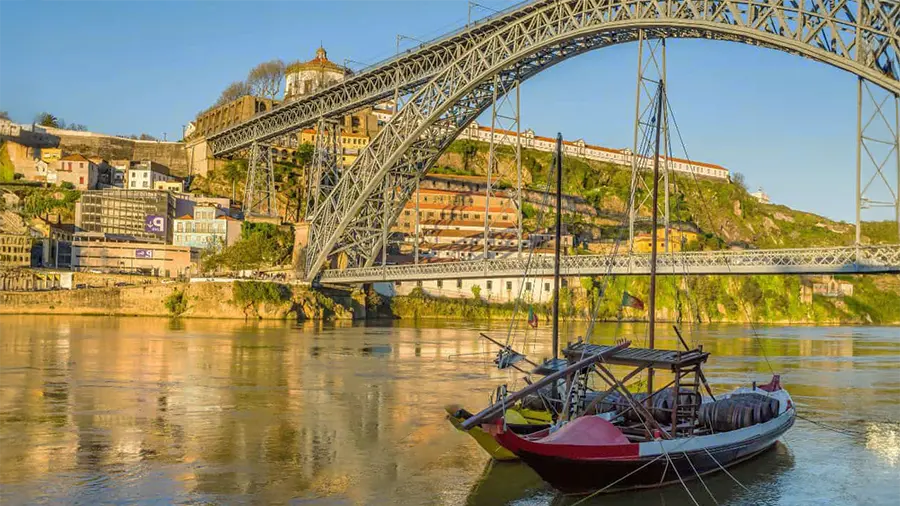
The study’s 30-minute route works well in dry weather and takes on different character in rain or when the river is in flood. Early morning walks reveal the city before tourist crowds; evening walks catch the light on the tile work and stone facades. The Douro at sunset, visible from multiple points on the classic route, changes how the city feels seasonally—higher and more dramatic in winter and spring, calmer in summer.
For anyone relocating to or spending significant time in Porto, building a personal walking rhythm matters more than following a prescribed tourist route. The city reveals different sides depending on where you start, what time you walk, and which smaller streets you allow yourself to wander into.
Unlock the door to exclusive property opportunities in Portugal with our bespoke advisory services. We pride ourselves on providing objective, client-focused advice that empowers you to make informed decisions.
From market analysis to legal support, we cover every detail. Don’t miss out on your perfect Portuguese property, contact us to begin your journey.
