
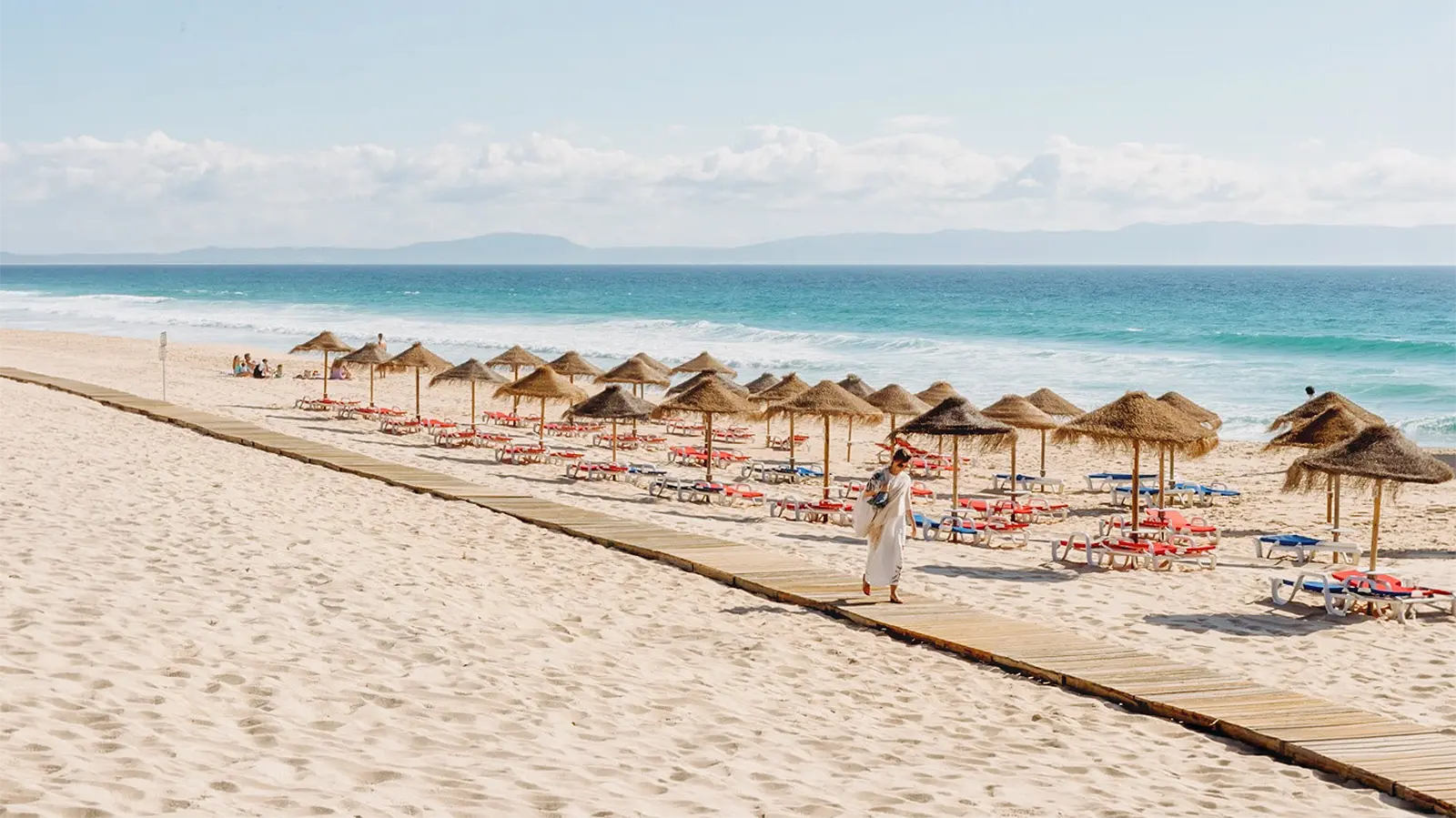
Comporta’s appeal has always been difficult to package. That was part of its charm. It was not a polished resort destination, nor a place built around spectacle.
Its value came from restraint: rice fields, pine forests, dunes, long beaches, simple architecture and a rhythm that felt removed from the louder parts of coastal luxury.
That is why the current interest in Comporta creates a real tension. The region can grow, and luxury development is not automatically the problem. Good hospitality, thoughtful architecture and high-quality investment can bring value.
But Comporta’s identity is fragile because it depends on atmosphere. If that atmosphere is over-produced, the place risks becoming a marketable version of itself.

The Luxury Of Restraint
Comporta became desirable precisely because it did not feel overly designed. Its luxury was not built on grand entrances, excess or theatrical service. It was found in space, silence, natural materials, privacy and proximity to the landscape.
For many visitors and buyers, that restraint became the point. Comporta offered something close to Lisbon but emotionally far away from it. It felt rural and coastal at the same time. It had sophistication, but without the pressure to perform sophistication.
That balance is rare. It is also easy to disturb.
The most valuable thing about Comporta is not only its coastline or its real estate potential. It is the feeling that development has not yet overwhelmed the land. Once that changes, the destination may still be expensive, but it may no longer feel exceptional.
When Place Becomes Product
The danger begins when a place becomes fashionable enough to be copied. Suddenly, “Comporta style” becomes a formula: neutral tones, natural textures, barefoot luxury, slow living, local craft, sustainability language and carefully framed simplicity.
None of these things are wrong on their own. In fact, many of them are part of what makes the region attractive. The issue is repetition without depth. If every new project borrows the same vocabulary of authenticity, the result can become strangely generic.
This is the paradox of place-based luxury. The more a destination is marketed for its uniqueness, the more vulnerable it becomes to standardisation. What started as local identity can become a design brief. What felt natural can begin to feel staged.
Comporta does not need to become another global luxury template with Portuguese scenery attached. Its strength lies in the fact that it still feels specific. If that specificity is reduced to a brand language, something important is lost.

Access Is Part Of The Identity
There is also a practical question that cannot be ignored: access. Portugal’s coastline is not just a private backdrop for premium development. Beaches are part of the country’s public identity, and the perception that access is becoming more difficult can quickly create tension.
This matters because Comporta’s appeal has never depended only on exclusivity. It has depended on openness: open beaches, open horizons, open landscapes. If high-end development creates the impression that certain areas are becoming socially or physically less accessible, the region’s identity begins to narrow.
Luxury destinations survive when they remain connected to the places around them. They weaken when they become enclaves. Comporta’s future depends on whether it can welcome investment without creating distance between visitors, residents, workers and the landscape itself.
Sustainability Must Be Real
Sustainability is now part of almost every luxury project’s language. In Comporta, it has to be more than language.
It is easy to use local references, muted colours and natural materials. It is harder to manage water use, protect fragile ecosystems, reduce pressure on infrastructure, support local employment and consider where workers can actually live.
It is harder to ensure that luxury does not quietly push out the communities and landscapes that give the destination its meaning.
For Comporta, sustainability cannot be decorative. It has to include the land, the beaches, the villages, the labour market and the long-term social balance of the region. Otherwise, the word becomes part of the branding rather than part of the solution.
Comporta does not need to reject luxury. The right kind of luxury can protect, restore and elevate a place. But that requires limits, discipline and respect for what was there before the market arrived.
The risk is not that Comporta becomes successful. The risk is that success makes it less like itself.
If Comporta loses its restraint, it loses its luxury.
Unlock the door to exclusive property opportunities in Portugal with our bespoke advisory services. We pride ourselves on providing objective, client-focused advice that empowers you to make informed decisions.
From market analysis to legal support, we cover every detail. Don’t miss out on your perfect Portuguese property, contact us to begin your journey.
